September 1, 2026
From Pixel to Deed: How Pixeldeed Works
The internet was never really land - until now
In the physical world, owning land is straightforward: you get a deed, your ownership is verified, and from there you can sell it, rent it out, or build on it. Online, we've never really bought "space" - we've only ever borrowed it from a platform. An Instagram page, a domain name, even a Reddit community - if the platform disappears, so does everything you built on it.
Pixeldeed solves this: a piece of digital "land" that is owned onchain, non-custodially.
1. The grid: the physical structure behind 1,000,000 pixels
Pixeldeed is a 1,000 x 1,000 grid - 1,000,000 pixels in total. This grid is divided into small 10x10 pixel units called Cells (each Cell contains 100 pixels).
But you don't buy a single Cell. A group of adjacent Cells comes together and mints as an NFT to form a Block. Once minted onchain (on Robinhood Chain), that Block becomes your online "address."
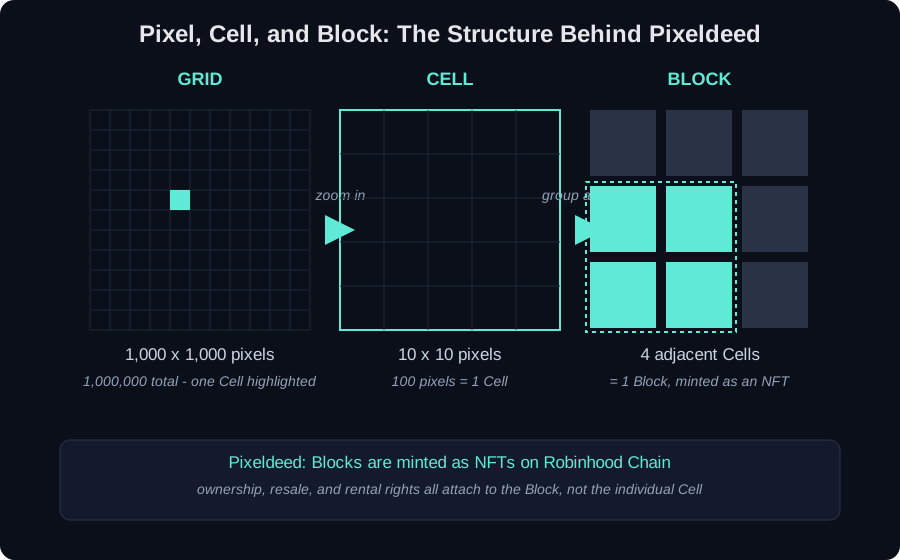
This isn't just a technical detail - it's a strategic principle. Owning one large, intentionally consolidated Block delivers better visibility, higher resale value, and stronger rental income than owning scattered, disconnected Cells.
2. Why we deployed on Robinhood Chain
Choosing a chain isn't just a technical decision - it's a strategic one that directly shapes who Pixeldeed reaches, how fast it runs, and how affordable it is.
Trading-grade speed.Robinhood Chain runs on 100ms block times - dramatically faster than Ethereum mainnet's 12 seconds or Base's 2 seconds. For a marketplace like Pixeldeed, where buying, reselling, and renting Blocks all require frequent transactions, this speed directly shapes the user experience.
Institutional-grade infrastructure.Robinhood Chain is a Layer-2 built on Arbitrum technology, inheriting Ethereum's security. It supports Chainlink oracles and a growing DeFi and real-world-asset (RWA) ecosystem - meaning Pixeldeed isn't running on some small, obscure chain, but on infrastructure actively built toward real financial use cases.
A ready-made user base.Robinhood Wallet natively supports Robinhood Chain, so millions of Robinhood users can connect without any extra setup. That's a built-in distribution advantage with no cold-start problem.
Permissionless and EVM-compatible. Standard Ethereum tooling and Solidity smart contracts work out of the box - developers get a familiar environment, while users benefit from low fees and high throughput.
In short: since Pixeldeed carries the idea of "digital real estate," building on a fast, reliable chain designed for real financial use is the logical choice.
3. Why the word "deed" matters
The "deed" in "Pixeldeed" isn't arbitrary. A deed is a legal document that proves ownership. A Block minted onchain serves exactly that function:
- Non-custodial - Pixeldeed never holds your NFT. It stays in your wallet.
- Recorded onchain - your ownership is public and verifiable, with no room for dispute.
- Platform-independent - content that violates the rules can be hidden or removed, but no one can seize the NFT itself.
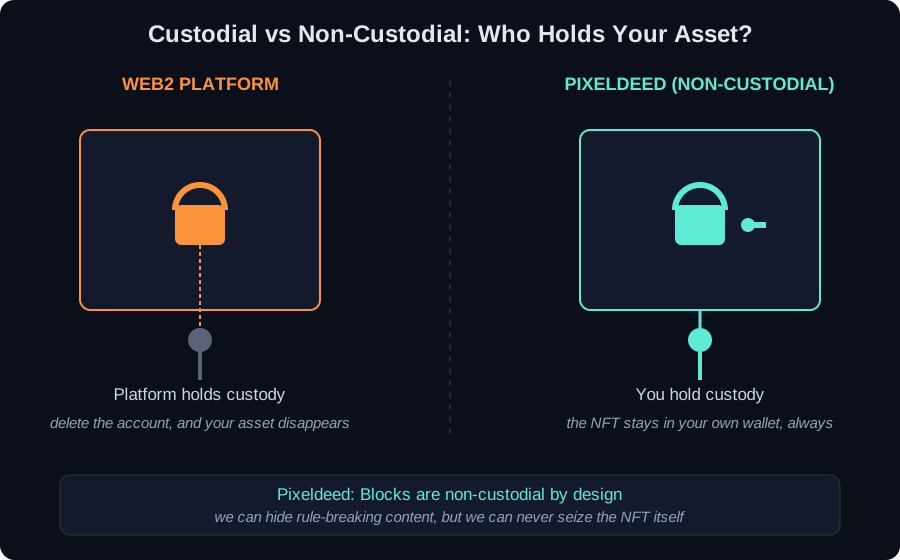
This distinction is the core line between Web2's "borrowed space" and Web3's "owned space."
4. What owning a Block lets you do
A Block isn't just an NFT - it's a piece of digital property you can actively use:
Display content - Connect your wallet, add an image, a title, and a link. It goes live after automated moderation, usually within seconds.
Resell - Anytime, at whatever price you set. Pixeldeed takes a 5.5% commission.
Rent out - Transfer only the display rights for a set period, without selling the NFT itself. Pixeldeed takes a 2.5% commission.
Together, these three turn a "static NFT" into yield-generating digital property - something you own not just to hold, but to actively put to work.
5. How to get a Block
| Method | Description |
|---|---|
| Whitelist window | Free mint - you only pay network gas |
| Public mint | Opens after the Whitelist window closes, Free mint - you only pay network gas |
| Resale market | Always open, at any time - even after mint windows close, you can always buy a Block from an existing owner |
Roughly 10% of the grid is allocated to the team, and this has been disclosed upfront for transparency.
6. Fee structure - kept simple
| Action | Fee |
|---|---|
| Whitelist mint | Free (gas only) |
| Public mint | Freemint |
| Resale | 5.5% to platform |
| Rental | 2.5% to platform |
| Editing content, listing/canceling a listing, withdrawing proceeds | Free |
| Holding a Block | No fee |
Gas fees go to the network, not to Pixeldeed. Any fee changes only apply going forward - they never affect past transactions - and any material change will be announced in advance.
Conclusion: Not the pixel, the deed
The core idea behind Pixeldeed is simple but far-reaching: a place online doesn't have to be just a window for displaying images - it can be property. Digital land you can buy, own, rent out, and resell.
Buy the pixel. Own the deed.